Friday, 24 February 2023

1st Bn at the capitulation of Martinique, 1809

 24th February 1809 – ON THIS DAY IN ROYAL WELCH HISTORY

1st Bn at the capitulation of Martinique, 1809
Martinique was a base for French activity in the West Indies. 1 RWF was part of an expeditionary force sent to capture the island. It was highly commended for its contribution towards the defeat of the French. For its bravery the battalion was presented with the Napoleonic Eagle captured from one of the French regiments which surrendered. MARTINIQUE 1809 was awarded as a battle honour.
Sir George Prévost with sword from Nova Scotia House of Assembly to commemorate his victory at Martinique, The Halifax Club, Halifax, Nova Scotia.


Monday, 13 February 2023

Tuesday, 3 January 2023

24th Battalion


 An excellent photograph of what is believed to be some of the SNCOs of the 24th 
Battalion, the Royal Welsh Fusiliers. The full details of the individuals in the photo are not known but the Regimental Sergeant Major seated centre is WO1 RSM James Crinyion.  Crinyion was the son of a Fishmonger from Birkenhead and had a twin brother served in the Royal West Kent's (SSgt). Crinyion served as RSM of both the Denbighshire Hussars Yeomanry (DHY) and also when the Regiment was subsumed into the RWF as the 24th Battalion on 1st March 1917.  Crinyion was later commissioned and went onto serve with the 15th Hussars post war. 

There is much information in the photo. Firstly the RSM is wearing his DHY cap badge which he was not officially authorised to do! When yeomanry regiments were 
re-designated into infantry battalions the officers were allowed to retain their yeomanry regiment’s collar badges only. The remainder of the regiment wore the badges of their new Regiment. This is clearly Crinyion’s stamp of character on his position. 
Those men with their right forearm visible are showing four overseas service chevrons which denote four years service outside of Great Britain. This puts the year that the 
photograph was taken as 1918. 24 RWF were moved along with the rest of the 74th (Yeomanry) Division from Palestine to the western front in France on 24th April 1918. The German spring offensives had left the British Army dangerously short of manpower on the western front leading to several divisions being transferred from General Alenby’s force in Palestine to France. Examining the background, the terrain looks arid and the troops on the high ground to the rear look like they could be Indian troops. This therefore may suggest that the photograph was taken in Palestine in the early part of 1918.

All the SNCOs are wearing a battalion shoulder flash for recognition purposes. This 
appears to be a diamond with a white stripe down the middle. Whilst there are examples of a similar flash for the 5th/6th RWF in the Regimental museum archive we do not 
possess an example of the 24th Battalions shoulder flash. 

Also note that the RSM and the Company Sergeant Major to his right are wearing 
Jodhpurs. This is possibly another reference to their previous service at a yeomanry 
regiment.

Monday, 5 December 2022

Arthur Askey


 #eyahumour @explorearchives

Arthur Askey CBE - British Stage, Radio and Film Comic. Born in Liverpool in 1900, only 5'2" he enlisted in the Great War aged 18 into a Bantum Battalion of the Royal Welsh Fusiliers. While in the army he worked with concert parties and this led him to a career as an entertainer, first in Music Hall then Radio and Film. He was the first T.V comedian when John Logie Baird used him in to appear in his early T.V experiments in the 1930`s. In WW2 he served in ENSA entertaining troops overseas.

Wednesday, 30 November 2022


#EYABeards @explorearchives Robert Shields VC was a Welsh recipient of the Victoria Cross. He was born in Cardiff, Wales, in 1827 and died in Bombay, India, in 1864. On the morning of 8 September 1856, during the Crimean War, Corporal Robert Shields volunteered to go along with Assistant Surgeon William Henry Thomas Sylvester in order to rescue an injured officer who had been incapacitated by a shot not far from their position outside the city of Sevastopol’s walls during the siege of the city.


The wounded officer was one Lieutenant Dyneley, the Adjutant of Shields’ own unit in the Royal Welch Fusiliers regiment. He had been shot and wounded near the Redan, a fort built close to Sevastopol, at this time it had been hastily occupied by more than a dozen Russian soldiers. It was an extremely dangerous and foolhardy thing to venture anywhere close to the Redan, as they would be well within range of all manner of enemy guns. Nevertheless, Sylvester and Shields decided to attempt to save the wounded man.


Together, they reached the lieutenant; however, they quickly noticed that his wounds were far more serious than they had anticipated. Sylvester dressed Dyneley's wounds as well as he was able while under heavy fire from the Redan and returned to the cover of their trenches, bringing with them the injured man. Dyneley later died from his wounds.


For their bravery, both men were awarded the Victoria Cross, subsequently going on parade for the first presentation of the new medal. Sixty other men were present at Hyde Park on 26 June 1857. The recipients were made up of both the army and the navy, and they were presented with the award by Queen Victoria herself.


Wednesday, 9 November 2022

Regimental harpists

 Earlier this year, at the Wrexham Archive, we researched John & William Roberts, father and son, who both occupied the position of Regimental Harpist in the mid-late 19th century.

We were assisted by Dr Rhian Davies, who has advised us of a book launch "The Art of Music" to take place on Nov 22nd at the National Library of Wales Commencing at 2.30pm.
We are delighted to say that John Roberts and William Roberts both feature in the book - the latter depicted at Gibraltar.
The event is free, and will include live music and refreshments. Tickets are available for the public to book at: https://www.library.wales/visit/things-to-do/events
May be an image of yr Awyr Agored a testun sy'n dweud 'The ART TheARTof of MUSIC BRANDING the WELSH NATION PETER LORD and RHIAN DAVIES'

9th November 1714 - ON THIS DAY IN ROYAL WELCH HISTORY

 9th November 1714 - ON THIS DAY IN ROYAL WELCH HISTORY

Styled Prince of Wales’s own Royal Regiment of Welsh Fuzeliers, 1714
The title first appeared in the London Gazette of 9-13 November, which stated that ‘His Majesty [George
I] has been pleased to appoint Major General Joseph Sabine to be Colonel of his Royal Highness the
Prince of Wales’s own Royal Regiment of Welsh Fuzeliers.’ This was the first time the Regiment was
connected intimately with the heir-apparent.


Thursday, 15 September 2022

Royal visit Londonderry - 19th July 1944

Londonderry - 19th July 1944.
During a royal visit, the Royal Family visited the men of the 13th Bn RWF. Pictured are His Majesty the King, Colonel in Chief, with Her Majesty Queen Elizabeth and Her Royal Highness Princess Elizabeth. The King is talking to Lt-Col JE Nickson MC and Major LH Yates. This is the first of many visits that Princess Elizabeth, later HM Queen Elizabeth and Colonel in Chief paid to The Royal Welch Fusiliers.
©Royal Welch Fusiliers Trust


Thursday, 8 September 2022

Sad day

 It is with great sadness that we learn of the passing of Her Majesty The Queen. On the 2nd of June 1953, the Queen became Colonel-in-Chief of The Royal Welch Fusiliers and subsequently The Royal Welsh. We were honoured and humbled that she visited the Regiment many times throughout her long reign. She leaves behind an incredible legacy and made an everlasting impression on all Royal Welchmen and their families.

Our thoughts and prayers are


with the King and the Royal Family at this sad time.

Wednesday, 27 July 2022

Free event

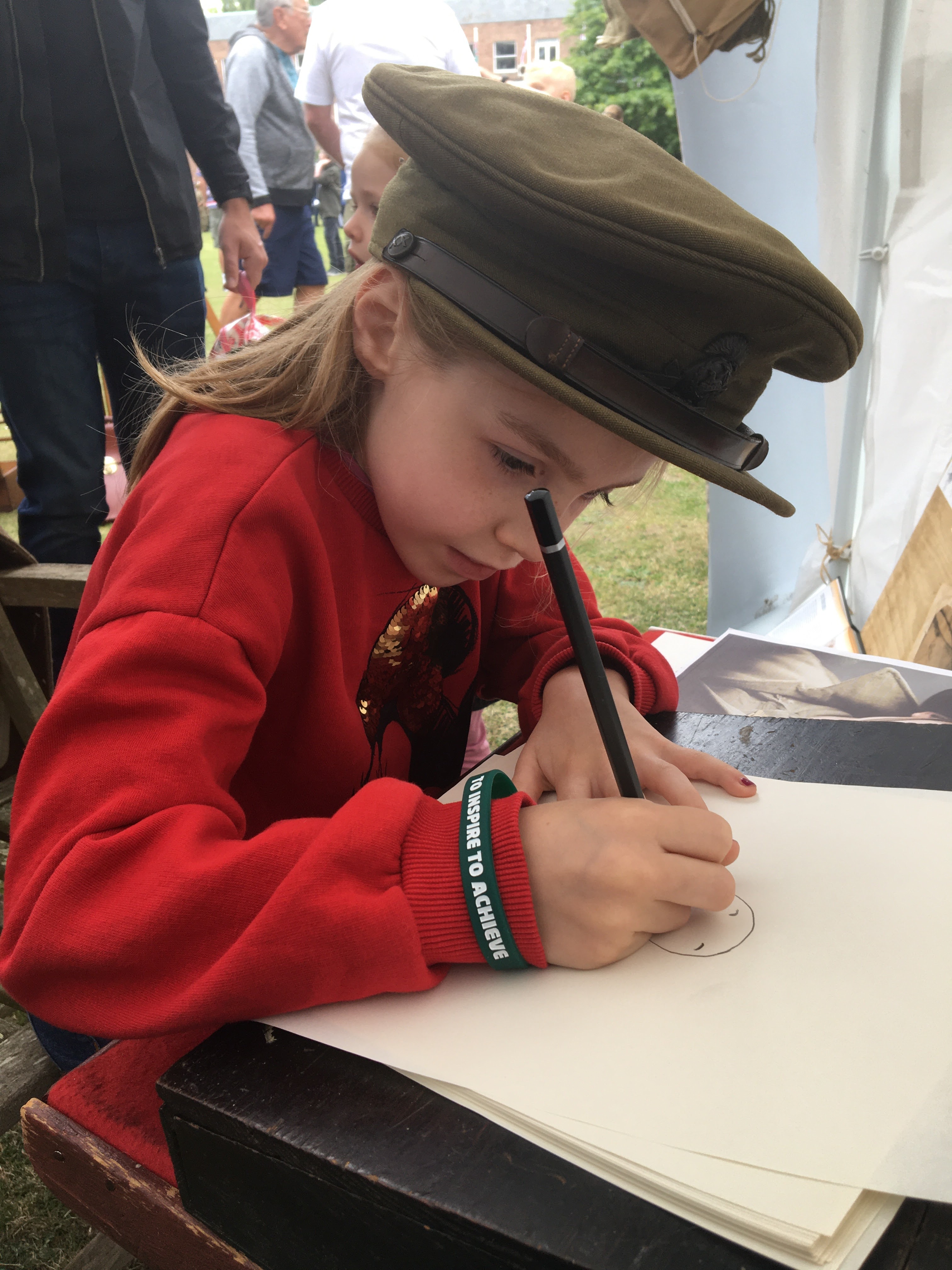
Free kids events tomorrow and Friday morning at Chester Ave in Kinmel Bay! Come down and take part with dressing up opportunities #Summeroffun 

Wednesday, 29 June 2022

Anyone for tennis?


 Anyone for tennis? 

In 1914, Max Woosnam joined the Montgomeryshire Yeomanry before transferring to the Royal Welch Fusiliers. He was a man of such talent and versatility that he must be ranked as one of the greatest all-rounders in the history of the British sport. 


He was an international or first-class player at association football, lawn tennis, golf, cricket, real tennis and racquets.

After the War he won victory in the men's lawn tennis doubles  at the 1920 Olympics and he also won an Olympic silver medal in the mixed doubles.


In May 1921 he made a winning Davis Cup début in the doubles against Spain with Randolph Lycett as his partner. The same pair went on to win the Wimbledon title in 1921.


Saturday, 18 June 2022

Friday, 3 June 2022

3rd June 1922

 3rd June 1922 - ON THIS DAY IN ROYAL WELCH HISTORY

The 2nd Battalion, The Royal Welch Fusiliers trooped their colours at Phoenix Park, Dublin on King George the V’s Birthday 3 June 1922.  


The 2nd Battalion had been reformed in Ireland following the end of hostilities in France at the end of the First Work War. They had spent difficult few years in Limerick during which time they were involved in countering the IRA. During this time Maj Compton-Smith was kidnapped and then murdered by the IRA.  Irish Independence was authored in January 1922 and the 2nd Battalion moved from Limerick to Dublin on 21 March 1922. 


The battalion finally left Ireland and arrived in Pembroke Dock West Wales on 15 December 1922.


Thursday, 2 June 2022

#OTD 2nd June 1953

 #OTD 2nd June 1953 – 

The Coronation of Queen Elizabeth II as monarch of the United Kingdom, Canada, Australia, New Zealand, Union of South Africa, Pakistan and Ceylon took place on 2 June 1953. 


HM the Queen inherited the position of Colonel-in-Chief of The Royal Welch Fusiliers from her father. A detachment from The Royal Welch Fusiliers was on parade for Her Majesty’s Coronation.

Opening of our museum


 2nd JUNE 1960 – ON THIS DAY IN ROYAL WELCH HISTORY

Oh Regimental Museum opened at Caernarfon Castle, 1960

With the closure of the Regimental Depot at Wrexham in March 1960 the museum was moved to the Queen’s Tower at Caernarfon Castle.  The museum was opened by the Colonel of the Regiment, General Sir Hugh Stockwell. The first Curator of the Museum was Major Peter Kirby MC TD FMA DL who build the oak staircases and original display cabinets himself. The staircases are still in excellent working order today!

Monday, 30 May 2022

From a hard place to a rock


FROM A HARD PLACE TO A ROCK


First-Hand Accounts of Soldiers of the British Expeditionary Force on the Run in World War Two


due to be published 28 June 2022     Hardback     £18.99

.


FROM A HARD PLACE TO A ROCK - First-Hand Accounts of Soldiers on the British Expeditionary Force on the Run in World War Two


Col Jimmy Johnson DSO OBE MC, RWF has been described variously as a formidable soldier and a legend. Commissioned in the RWF in 1930, retiring in 1961, his service took him to many parts of the world. He now features in a book written by one of his nieces.


At the outbreak of war in September 1939 Johnson was with 1st Battalion which embarked for France with the BEF. When the battalion was tasked to delay the Germans at St Venant, B Company, under the command of Johnson, was ordered to outflank the Germans at Robecq. After bitter fighting B Company found themselves surrounded. Johnson was badly wounded by a sniper and the following day he and B Company were captured. Sent to a German controlled hospital for treatment, Johnson managed to escape at the earliest opportunity in the company of a Royal Artillery officer Captain 'Tommy' Trythall.


Jimmy's cousin, Captain Chris Waters 1st Field Squadron Royal Engineers had arrived in France on 17 May with 1st Armoured Division. The Squadron was soon attached to the 51st Highland Division which surrendered at St-Valéry on 12 June. After a week of forced marching up and down the coast Waters had had enough. He and a fellow office from his Squadron, 2/Lt Dennis Lennon, jumped through a hedge and lay low until the column was well out of sight.


This fascinating tale; part memoir, part social and part military history, tells a compelling story of war-time escapes from Occupied France. In addition to meeting a cast of interesting people from helpful farmers to obstructive petty officials and frustrated diplomatic staff, we learn of an outrageous attempt at extortion back home in England. Waters and Lennon wrote a journal of their time on the run, Johnson's story is largely told through letters sent home from internment camp and a later tape recording. Both stories are supplemented by first-hand accounts recorded by escapees they met en route.


As the men travel through France to Spain (where the two cousins were reunited) and on to Gibraltar their journey becomes more and more hazardous. It is miraculous that anyone completed a 'home run'.


Timandra has opened a Facebook page #fromahardplacetoarock .  In the run up to publication she will be listing some of the events that happened on the corresponding day in 1940 which may be of interest.


FROM A HARD PLACE TO A ROCK is due to be published 28 June 2022   Hardback     £18.99


Copies can be purchased from the RWF Museum or the publisher at https://www.troubador.co.uk/bookshop/history-politics-society/from-a-hard-place-to-a-rock-hb/

Dedicated signed copies can also be purchased direct from Timandra Slade. Please message her through her Facebook page for further details. #fromahardplacetoarock


Monday, 9 May 2022

Did he make it?

 Love going round the Museum taking close ups of individual artefacts. This is a shoulder belt clasp c.1810-1813. This one was dug up in Spain and would have belonged to an ordinary soldier. It has been damaged by a musket ball which may have proved fatal!


Wednesday, 4 May 2022

Job vacancy

 Job vacancy - @RWFMuseum wish to appoint an experienced and highly motivated Development Director who will manage the day-to-day operation of the museum at Caernarfon. Closing date 13 May: ow.ly/ffkj50IYQnt #MuseumJobs


Wednesday, 27 April 2022

#Somethingsmall

 #Archive30 #SomethingSmall Something easily missed in our Museum is this tassel from Napoleon's bed on St Helena where he lived in exile from 1815 to 1821!